The Benefits of EV Charging Stations in Apartment Communities
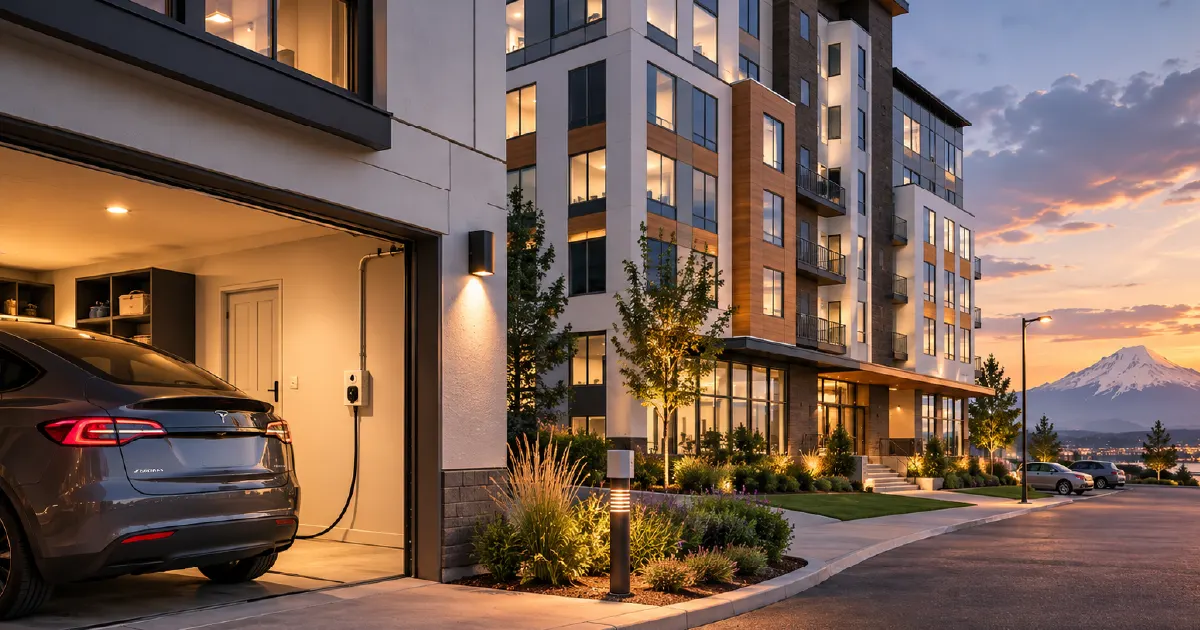
Owning an electric vehicle changes one small part of the daily routine: you have to think about where the next charge is coming from.
For someone with a garage or driveway, that may be easy. Park the car, plug it in, head inside.
Apartment living can be different.
Residents usually share parking areas, and installing personal charging equipment may not be an option. That makes access to EV Charging at or near home more important for people who already drive Electric Vehicles and for those considering one in the future.
It is not necessarily the flashiest apartment amenity. For the person who uses it several times a week, though, it can be one of the most practical.
*Looking for rental apartments? Explore available apartments at Living at Bliss.
Home Is a Convenient Place to Charge
Most vehicles spend several hours parked at home overnight, which makes that time especially useful for EV owners.
If charging is available where you live, you may be able to connect the vehicle after getting home and let it charge while you make dinner, watch TV, finish some work, or sleep.
Without that option, charging may need to happen somewhere else. Perhaps there is a charger at work. Maybe you stop at a shopping center or use a public charging station on the way home.
None of those choices is necessarily difficult. They simply add charging to the list of things you have to plan.
Having EV Stations at an apartment community can make the process feel more like part of parking and less like another errand.
Of course, the experience depends on the setup. A community with one frequently occupied charger offers something very different from a property with enough charging capacity for the residents who regularly need it.
That is why the details matter.
“EV Charging Available” Can Mean Different Things
Seeing EV charging listed among a community’s amenities is helpful, but it is only the beginning of the conversation.
If you drive an EV, ask how charging actually works.
How many charging spaces are there? Are they shared? Does the community use assigned EV parking? Is there a fee? Can a car stay connected overnight, or does it need to be moved once charging is finished?
It is also worth asking about the charger itself. Different equipment can deliver different charging speeds, and your vehicle’s own charging capability plays a role too.
A short list of questions before moving in can save a lot of uncertainty later:
- How many EV stations are available?
- Who can use them?
- How is charging billed?
- Are spaces assigned or shared?
- Are reservations needed?
- Are there time limits?
- What happens when a vehicle finishes charging?
The answers help you picture what charging would look like on an ordinary Wednesday, which is much more useful than simply seeing an EV symbol on a property listing.
Why Renters Are Paying More Attention
What people expect from a home changes.
Years ago, strong internet access might have felt like a bonus. Now it is part of everyday life for many households. Package storage became more useful as home deliveries increased. Flexible rooms became more valuable as work and home life began overlapping in new ways.
Electric Vehicles are bringing another consideration into the apartment search.
A resident who already owns an EV may care about charging immediately. Someone who is thinking about buying one two years from now may simply want to know that the community will not make that choice unnecessarily difficult.
That is where EV infrastructure becomes part of a larger question:
Will this community continue to work for me if my routine changes?
For many renters, that matters as much as what they need today.
The Connection Between EV Charging and Green Living
Transportation is one part of Green Living, though it is worth keeping the conversation realistic.
Electric vehicles do not produce tailpipe emissions while being driven. Their total environmental footprint is more complicated and depends on electricity sources, manufacturing, battery production, driving habits, and other factors.
An apartment community does not become “green” simply because chargers appear in the parking lot.
What charging infrastructure can do is make electric transportation more practical for residents who choose it.
That matters in multifamily housing because residents usually cannot decide on their own to install a charger in shared parking. They depend more heavily on what the property is designed or equipped to support.
In that sense, EV Charging is less about making a big sustainability statement and more about giving residents a practical option.
The Best Amenities Fit Naturally Into Everyday Life
Some amenities sound impressive on a brochure but barely enter a resident’s day-to-day life.
Others quietly make the week easier.
Package storage is useful when a delivery arrives while you are at work. Convenient parking matters when you get home late. A fitness area may save you a drive across town.
For an EV owner, charging close to home can work the same way.
For an EV owner, charging close to home can work the same way. It can become one of those practical conveniences that quietly makes the week easier when a charger is available.
That simplicity is part of what makes EV Charging relevant to the broader Apartment Living experience. It deals with a real routine rather than adding a feature simply for the sake of having one.
How Apartment Communities Can Prepare for More EVs
As more residents switch to electric vehicles, apartment communities may need to rethink how charging fits into shared parking.
That does not mean installing a charger at every space right away. In some communities, shared EV Stations may be enough. Others may benefit from designated EV parking or electrical infrastructure that makes it easier to add more charging options later.
There is more involved than simply installing the equipment. Communities also need to consider electrical capacity, charger placement, accessibility, maintenance, parking rules, and how residents will pay for charging.
When those details are planned well, residents should not have to think much about the system itself. Charging should feel straightforward to use and flexible enough to keep up as more people begin driving EVs.
What Fits Your Driving Routine?
Not every EV owner needs the same charging setup.
Someone who drives a few miles most days may have much more flexibility than a resident commuting a long distance. Battery capacity, vehicle type, charging speed, and access to charging elsewhere can all change what you need at home.
Before choosing an apartment because it has EV Stations, think about your own week.
- How often would you need to plug in?
- Would overnight charging suit your schedule?
- Do you have another reliable charging option near work?
- If the community uses shared stations, would you be comfortable moving the vehicle once charging is finished?
These are ordinary questions, but that is exactly the point. Charging becomes part of Apartment Living once it has to fit around work, errands, dinner, sleep, and everything else competing for your time.
EV-Ready Is Not the Same as Charger Included
There is an important distinction in conversations about EV-friendly homes and communities.
A property may have installed charging equipment that residents can use. Another may be EV-ready, with electrical infrastructure or pre-wiring intended to make adding a compatible charger easier later.
Those are not the same thing.
Where a home includes EV-charger pre-wiring, the homeowner typically chooses and installs the charger that suits their vehicle and needs, subject to the property’s requirements. Pre-wiring should not be described as though the charger itself comes with the home.
Being clear about that difference helps buyers and residents know exactly what they are getting.
EV-Ready Living at Tuscany Woods
Tuscany Woods in Marysville offers a useful real-world example of what EV-ready infrastructure can look like in a rental community.
The three-bedroom townhomes include attached garages that are pre-wired for EV charger installation.
That means the electrical preparation is already in place, but the EV charger itself is not included with the home. Residents who want home charging can select and install a compatible charger of their choice, subject to community requirements.
For someone who already drives an electric vehicle, having the pre-wiring available may make it easier to explore charging at home.
Another renter may not need a charger today but could appreciate knowing that the home has been planned with changing transportation needs in mind.
And for someone who does not expect to own an EV, the feature may barely factor into the rental decision.
That is one way thoughtful amenities can support different resident needs.
They give residents options without assuming that every household needs the same thing.
The EV-ready garage is also part of a broader collection of practical features at Tuscany Woods, including in-home laundry, central heating and air conditioning, attached garage space, and private outdoor areas.
None of those features needs to dominate the experience.
Together, they can help make everyday routines feel a little easier.
A Small Feature That Can Matter a Lot
Thoughtful living is about paying attention to how people actually use a home and the spaces around it.
Transportation is part of that everyday picture.
For someone who does not drive an EV, charging infrastructure may barely register. For someone who does, it can influence where they park, how they plan the week, and whether owning the vehicle feels convenient at home.
That is why EV Charging deserves more than a quick glance on an amenity list.
Ask how it works. Find out what is actually provided. Think about whether the setup fits the way you drive today and how your needs might change later.
The same idea applies to Green Living and apartment design more broadly. The most useful features are rarely the ones making the biggest promises. They are the ones that quietly fit into daily routines and remain useful as those routines change.
For EV owners, a convenient place to charge—or an EV-ready setup that gives them the option to install compatible equipment—can be exactly that.
A home should support the routines that matter to you. For an EV owner, that may include knowing there is a practical way to charge—or that the home is prepared for a compatible charger when the time is right.
And for an EV owner, sometimes it comes down to something as simple as knowing the home is ready for the way they drive.
Latest Posts



Luxury Apartments for Rent vs. Standard Apartments: What’s the Difference?
February 27, 2026